
Posts

Trending Hashtags & Social Media Growth

    Trending hashtags and social media growth are something you have probably seen on every post across social media platforms. Formerly known as the ‘pound sign’ to millennials, the hashtag is utilized so that social media users can see content that is relevant to their own niche. Hashtags ensure that you will see posts that are related to the content you are looking for. Therefore, hashtags are the number one way to grow on social media.   The Importance of Hashtags Trending hashtags have a lot to do with social media growth. In fact, they are important because they are a way to help brands reach a broader audience. When brands use hashtags, they can widen their reach. Posts that use hashtags typically get more engagement than posts that do not use hashtags. Statistics show that the use of hashtags increased engagement by 21% for most brands. They are a good way to keep content organized and help consumer find exactly what they are looking for.   How to Use Hashtags When using hashtags, it is good to make sure the word you are using is relevant to the post and even better to make sure the hashtag being used is trending. If you post about the amazing vacation, you just took, relevant hashtags could be words that pertain to your vacation. Trending hashtags will ensure social media growth and increase the visibility of your post so it’s seen by a wider audience. Remember, hashtags should be one word and contain no spaces. They can be added to your bio on your account, under posts, and even in comments you make on yours or another account. Understanding hashtags and utilizing them into posts is extremely important when building your brand. You want to make sure that you are using trending and relevant hashtags so that you can reach a wider audience and increase engagement on all posts. Trending hashtags lead to social media growth when used correctly and can be very beneficial to reaching your brand goals.

New Year, New Resolutions for Growth

With each new year comes opportunities for businesses to become better than ever. When the new year approaches, it is good to start thinking of new business resolutions for growth. Here are our top three New Year, new resolutions for growth in 2023.   Expand Social Media Channels New Year. New Resolution for Business means time to make some changes. Devoting time to social media and other digital channels is very important for small businesses. More and more people are using social media which is a top business trend that is expected to grow in 2023. There are many platforms that businesses can use to reach a wide variety of consumers by advertising and engaging directly with the customers using different marketing techniques.  This helps build customer loyalty as well as helps the business build their image and brand.   Learn a New Business Skill The world of business is full of learning opportunity. Learning new software, apps, or other business-related information can not only help your business thrive but can help you grow as a business owner. Your business will not take off if it stays in a bubble. Keeping up with the new trends is the perfect way to learn something new. Being able to adapt to new things is always a win when it comes to your business.   Stay Consistent Consistency is the key to success. Whether it is posting daily, writing weekly blogs, or making videos, it is important to be consistent so the business attracts more followers as well as increases traffic to the site.  This reflects on your business and staying consistent will give the image that your business is true to their customers and care about their content. It is fact that consistently leads to results, especially in business.   New Year’s resolutions can be a very helpful tool when it comes to your business. Creating new business resolutions for growth is the perfect way to start the new year.

Why Content Marketing Is Essential to Every Business Growth Strategy

Content is a necessary evil for business in any industry and the benefits are vast. Internally and externally, content can provide value for your business. The definition of content marketing is clear: “…a strategic marketing approach focused on creating and distributing valuable, relevant, and consistent content to attract and retain a clearly–defined audience — and, ultimately, to drive profitable customer action.” Five reasons content is a necessary evil: It helps to improve SEO (search engine optimization). Establishes your brand. Can increase market share. Drives web views. Helps build brand authority. Content is important not just because it works for building trust, generating leads, and cultivating customer loyalty, but because it has become the new normal and your customers expect you to deliver original and engaging content. It is, in itself, helping to evolve what customers expect from the brands they interact with. Neglecting it is way more risky than investing in it.

In-house Agency vs Outsourced Agency

So, you want to market your business. The first step is to decide whether you want to create an in-house marketing team vs working with an agency. Each of these solutions has pros and cons; what works best for one company might not for another.   Marketing Agency PROS vs CONS Expertise – You are now working with experts who have a wide berth of knowledge and are not limited one-dimensionally. Some agencies may specialize in specific industries. However, all agencies understand how to make the best use of your budget, build your brand voice and message, and track analytics. Agencies can also show you a return on your investment. Capabilities, software, and tools – As marketing professionals, agencies have all the right tools and software to build your brand effectively. There is no need to purchase your own software or invest in a bank of information.  Agencies have more training and experience, and can focus on helping you reach your goals and objectives. Specialties – Agencies are composed of people with different degrees of specialization who work together to create multiple cross-channel campaigns, whereas an in-house team might be limited in this area. Scalability – At busy times of the year, some in-house agencies may not have the bandwidth to sustain or increase your marketing presence. Multiple clients – While agencies are committed to each brand they work with, some clients could feel put off by the notion that the agency is working just as hard with other clients. However, this is often not the case. Your account managers are a part of your team and want to see you succeed. Control – Sometimes it is hard for businesses to relinquish any control over their marketing efforts, but agencies function best with some wiggle room. They value your input, and will not move forward with any big strategy decisions unless you grant your permission first. The ability to trust your agency to pursue your best interest doesn’t always happen overnight.   In-House Marketing Team PROS vs CONS Brand familiarity: – The people who work within your company know the brand — presumably inside and out. They have a thorough understanding of what you do, why you do it, and what goes into it on a daily basis. While agencies are committed to getting to know the ins and outs of your brand, in-house teams have a different stake in the game. Accessibility – Everyone works for the same company. Focus – Your in-house team does nothing but marketing for you and cash their paycheck. Recruiting Talent – Putting together a solid in-house team that works well together is a massive time and financial investment. Expenses – A successful marketing team uses SEO tools. In fact, this is another reason why an agency is a better idea. SEO training requires consistent CEU clases to keep up with industry trends. In-house marketing departments typically freelancers if your employees aren’t trained in everything you need to accomplish your goals. You can usually count on an agency to have the necessary tools already at their disposal, so you don’t have to fund them independently. Capability and Scalability – When putting together your team, you are limited to the skills found within your applicant pool and the resources you have to work with. Assembling your dream marketing team can be a long and costly process. In-house teams often have less access to specialized skill sets. Similarly, any employee turnover can offset the balance of your team and lead to setbacks. This puts pressure on the remaining staff, which could lead to lagging performance. Compare this to an agency, where there is no risk of your strategy being put on hold.   At Silesky, we pride ourselves on being an outside agency with an in-house attitude. Want to learn more about what that means? Give us a call.

How to Find and Define Your Brand Voice Across Every Channel

Suppose you’re sitting at a dinner table with a group of friends, and the lights go out, and the room is pitch black, and you cannot see anyone. What are the chances you can recognize who is speaking simply by hearing their voice? Odds are pretty good you know each person by voice. Even without a visual element, you can recognize their distinct cadence, inflection, and tone. When you create a brand voice, the goal is exactly the same: a distinct voice that is unmistakably yours. Your customers should be able to identify your brand simply by hearing or reading your branded materials. What’s a good example of a strong brand voice? How about Coca Cola? It’s brand voice focuses on positivity and friendliness. All of their marketing is full of examples of happy lives made better with a drink of Coke. This consistent brand voice helps them to build a strong connection between their product and good times. Choosing a voice is rooted not only in the brand persona you’re trying to present, but also in what would be best received by your target audience. Start by asking yourself a few questions: Who is your target? What kind of voice will they hear? What do you want them to remember? Once you’ve thoroughly analyzed your target audience, you can begin determining your brand voice. A brand voice can be humorous or serious, casual or professional, instructional or emotional. What would your brand’s personality be if it were personified? How would this personality change from one platform to the next while remaining cohesive? Think about which brand elements of your business you want to be immediately understood by your audience and how you can accomplish that with your messaging. What is your brand promise? Your brand promise is the commitment to your customers that really matters to them and differentiates you from your competition. The following are a few brand promises you will recognize: GEICO – “15 Minutes Or Less Can Save You 15% Or More On Car Insurance.” FedEx – “Peace of mind.” Apple – “Think differently.” BMW: “The Ultimate Driving Machine.” Walmart: “Save money. Live better.” The best brand promises go big, challenge the status quo, and connect with consumers on a deep emotional level. They also stay the course for years at a time. Facts tell the analytical side of our brain what the company does, but the brand voice tells the creative side of our brain what the company feels like to engage with. Consumers un-follow brands on social for many reasons. Irrelevant content is one of the top reasons, as well as too many posts (or ads),     Knowing your voice and being true to it is important because, over time, your brand voice becomes what you’re known for. What is the best advice we can give you? Find your voice and stick with it! Need some help? Give us a ring. We are branding professionals.

Social Media Myths That Are Quietly Holding Your Business Back

Like many modern forms of marketing, social media is surrounded by myths and misunderstandings. Its rapid growth and evolution can make it difficult to follow and use strategically. Nevertheless, social media is an essential and powerful marketing tool in today’s world.  in today’s world. Let’s debunk some SMM (Social Media Marketing) myths.   Myth 1: My customers are not on social media Pew Research Center reports that 72% of American adults who are online use social networking sites. (note: 85% of American adults are online). Even among Americans 65 years old and better, 43% use social media.  So even if your customers aren’t yet using social media to conduct business, they are more likely to engage with social media in some capacity.   Myth 2: SMM is for creating new customers Rather than viewing social media as a vehicle to acquire new customers, it is better viewed as a loyalty retention program. Research shows that most people who “like” a page are current or former customers. However, if these followers share your content frequently, it can translate into new exposure. Frequent exposure creates brand authority and brand authority creates higher ranking on search engines.   Myth 3: Social media effectiveness is not measurable Like many forms of marketing, it is always easy to look at social media and question whether the investment is making you any money. However, social media metrics available on the platforms and various management software like Hubspot or Hootsuite allow you to view factors such as: how much traffic SMM drives to your website, how many customers are engaging in the conversation on your page, where your customers are coming from and also which other platforms they participate on social.   There is a method for effective SMM and it does not mean posting three times a day or sharing other people’s articles non-stop. Effective social media happens when you follow your brand voice and become the authority in your field. The ins and outs of social media can feel daunting at times. Of course, this is especially true when there are so many other elements of your business to manage. Need assistance? Schedule a free audit of your social media marketing with our SM Manager. Or, call 410-205-6168 to speak with one of our sales associates.

How to Vary Your Posts on Social Media

Varying your posts on social media helps drive sales. When it comes to your business’s social media page, varying the type of content that you post is almost as important as the content itself. Nobody likes to hear the same things over and over. While stating your mission, advertising your product, and promoting your business are essential, there is a thin line between staying front of mind and being annoying. If your followers feel like the content on your page is predictable, repetitive, overdone, etc., you risk losing their attention or, worse, having them develop a negative association with your brand. By varying your content, you can focus on your goals while fostering a more holistic and personable social media presence. People are more likely to engage with your content if they can relate to it. Keep the characteristics of your target audience in mind when determining what types of material to post. Below are some examples of different kinds of posts you can include on your social media: Advice: Share tips, tricks, and hacks relevant to your industry. Advice is especially valued when it comes from someone they might consider an expert on the matter. Questions: Pose a question and prompt people to answer in the comments. Doing so is especially significant if there is something you genuinely want feedback on. Always be sure to respond to any comments left on your posts. Inspiration – Relatable and motivational quotes, lyrics, or images can connect with the user’s emotions. Product highlight: Focus on and highlight a specific way your product or service can help the audience. What unique features do you have to offer? How can you make a difference in their lives? Outside article – Get into the habit of sharing relevant articles, studies, or stories that you find interesting, helpful, or motivating. It may even encourage other people to share your content, too. Personal posts: It is always important to be friendly and personable. People want to see the person behind the page and feel like there is a real human being running it. Blog – Besides being great for SEO, regularly posting blogs gives people something to look forward to reading. Not sure you want to handle all this “social” stuff on your own? We’re here to help. We offer three different social media packages and would be happy to send them to you to review. Fill out our online form to receive a free one-hour social media audit of what you are currently doing for your business.

Which Color Manifests your Brand Identity?

When you think of Nickelodeon, orange comes to mind; when you think of Coca-Cola, you imagine red; when you think of Facebook, you think dark blue. In the eyes of the target market, color repetition is part of the brand; it communicates the company’s values and visually differentiates it from competitors.   Different colors carry different meanings and trigger different emotions, such as the ones in the chart below. Before deciding your own brand’s colors, spend some time reviewing your competitors’ brand identities to ensure that yours stands out, and that the colors reflect your business’ personality and tone of voice.   A brand’s palate should include three colors: a base an accent, and a neutral color. Your base color is the foundation of your color palate; it should reflect your brand’s most dominant personality trait. Your accent will be used almost as often as your base color. It should not only match the base color, but also be in line with your brand’s characteristics. Lastly, a neutral color that can be used as a background. Most often this color is not overpowering or attention-grabbing.   Keeping the above in mind, there are several options when it comes to creating a color scheme:   Monochromatic: A monochromatic color scheme consists of different shades of the same color. For brands with one trait that dominates over all the others, monochromatic schemes offer a great solution. Analogous: Analogous colors are next to each other on the color wheel (e.g. red and orange), and usually have similar emotional connotations, but not as strongly as a monochromatic palate. Analogous color schemes are safe, but do not stand out as much. Complementary: Colors that are directly opposite each other on the color wheel are known as complementary colors. These colors, when paired, bring out the best in each other (e.g. yellow and purple). The stimulating and dynamic nature of complementary color palettes makes them very popular, so be mindful that your color scheme does not match another brand too closely. Triadic: Triadic colors are evenly spaced out on the color wheel (e.g. orange, purple, and green). These pallets are safe, stable, and offer variety, but need to accurately reflect your brand identity.   Research demonstrates that consumers perceive the same characteristics in brands as they do in people; consumers rely on emotional associates and instinct to choose your brand over others. An effective, consistent visual identity will foster loyalty, beyond just a one-time decision. These colors should be present across all consumer touch-points: your website, your logo, social media, product packaging, etc.   Putting together a visual brand can be intimidating. We’d love to help.

What Makes Good Branding and How to Build It for Your Business

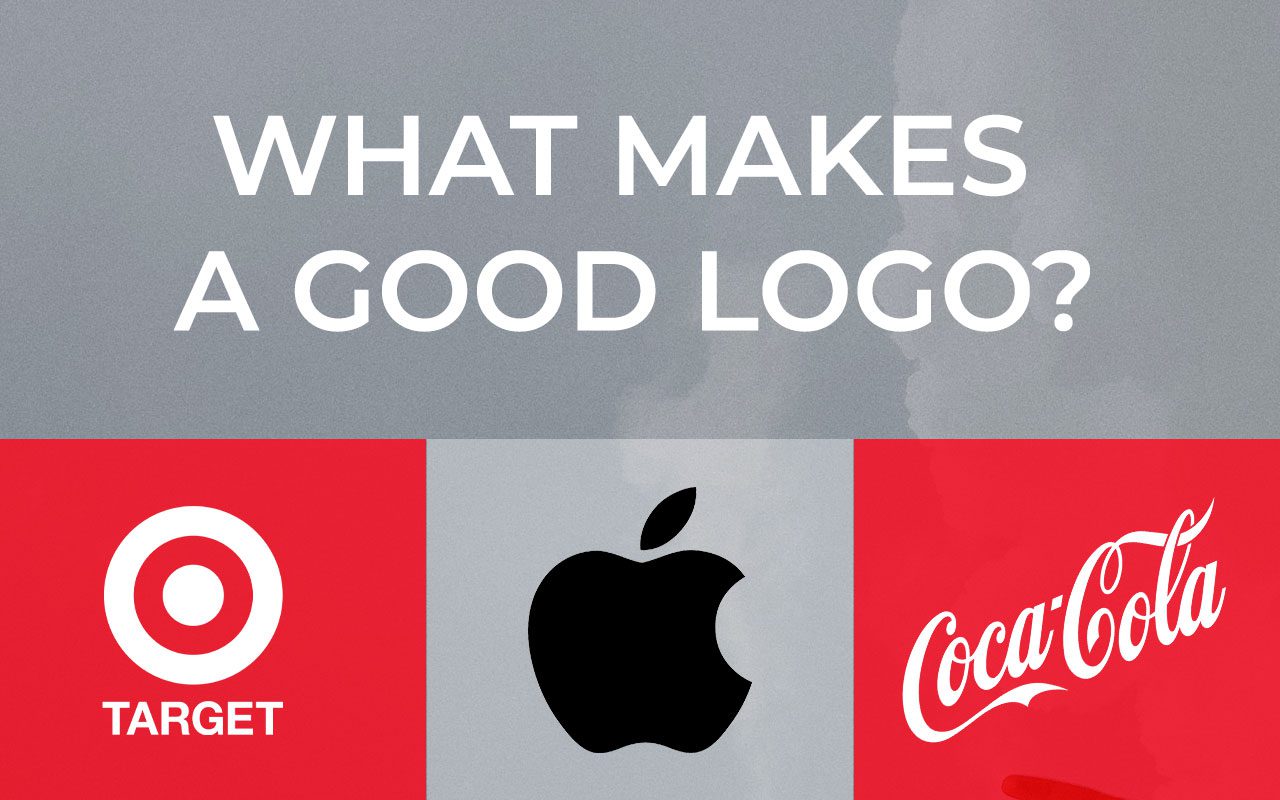
Apple. Coca-Cola. Target. When you read each of these brand names, there is a good chance that the corresponding logo will also come to mind. That’s good branding! If we were to ask you what they all had in common, perhaps you’d say, “they are big, successful corporations.” You’d be correct. However, we’re looking for the answer: “they all have distinct and memorable branding.” Each of these iconic brands has stood the test of time. You might argue for different reasons why this success happened. But, again, we’d say that their company foundation started with a strong logo symbol that represented whom they wanted to be in the public domain. After all, a strong brand is the nucleus of a company’s success. Why is a logo so important? Well, when you meet a new person, the first thing they see is usually your face. If they cannot see your face, they might hear your voice. If they can’t see or listen to you, they may get an idea of who you are from your smell or interactions with them. These are all identifiers that represent the brand of the individual. A logo for a business is no different. A corporation has a specific look, voice, and projected image. Unique imagery, such as the apple for the Apple Corporation, leaves an impact; it’s memorable and remains front of mind with their customers and on the radar of their target audience. You don’t have to be Apple, Coca-Cola, or Target to be successful. The money would be nice, but even smaller businesses can impress with solid branding. Take Lemonade for an example. In insurance branding, it’s hard to differentiate yourself and create trust. Lemonade sticks out because it heavily uses the color pink, and its Instagram account is over-the-top creative! The past two examples clearly show that a logo’s primary purpose is to identify with your company. To Paul Rand,  one of the world’s most excellent graphic designers, “a logo is a flag, a signature, an escutcheon, a street sign. A logo does not sell (directly); it identifies. A logo is rarely a description of a business. A logo derives meaning from the quality of the thing it symbolizes, not the other way around. A logo is less important than the product it signifies; what it represents is more important than what it looks like. The subject matter of a logo can be almost anything.” Does your brand make an impact? Your brand should follow these basic criteria: Simple We’re talking uncomplicated, like the Nike swoosh. Even without words, Nike’s brand is unmistakably Nike. Nike is the Winged Goddess of Victory. The logo is derived from goddess’ wing, ‘swoosh,’ which symbolizes the sound of speed, movement, power, and motivation. This is great because the Nike logo is so strong that you can see it from your car as you drive 80mph past a billboard on the highway! Communicates Core Values Going back to Lemonade, their core values are right up front. There is no guessing. They state it on their website, on their social and in everything they do. They are “transparent,” and they make sure to tell us. Appropriate A simple way to understand these criteria is to consider the Toys“R” Us logo. This logo was designed to attract children. The youthful colors and the backward “R” remind us of how a young person might write a letter when first learning to write. Yet, this look would not work for a law firm because attention to detail is essential in law. Memorable This principle goes hand-in-hand with both of the previous two. Keeping your design simple yet appropriate makes it unique. A brand is exceptional when it elicits an emotion in you that you want to move toward. It could be funny, intense, or weird. For example, the gecko for Geico out in 2000, and it was strange and different but undeniably memorable. Also, maintaining consistency across all marketing channels keeps your brand consistent and impressive. Timeless Ultimately, the goal is longevity. Before brainstorming your logo, do some research. Reference past and present aesthetic trends and look at what your competition is doing with their brand. Branding should not be trendy; it should be able to stand the test of time and still be effective in 10, 20, or 50 years. After all, if you invest your time or money into your visual branding, you want something with staying power. Branding and logo design can be tricky. So, give us a call; we would love to help.

John Sindorf

Director of Strategic Alliances

John believes most businesses don’t need more vendors; they need the right strategic partners.

With decades of experience helping small and mid-sized organizations grow, John specializes in connecting business leaders with the expertise they need to overcome challenges, strengthen operations, and scale with confidence. Whether the conversation centers on sales strategy, marketing, AI, or operational efficiency, his focus is always the same: identifying the right solution for the business, not simply adding another service provider.
Known for his relationship-first approach, John builds partnerships rooted in trust, practical guidance, and measurable outcomes. He helps business owners simplify complex decisions, align the right resources, and spend less time managing vendors and more time leading the businesses they’ve worked so hard to build.

Off the clock: You’ll likely find John networking over coffee, strengthening relationships, and proving that the best business opportunities still begin with genuine conversations.

Kiki DeVane

Marketing Operations Manager

Kiki started her career wanting to change the world through policy, then discovered that a well-built website could be just as powerful. That pivot led her through event marketing, federal communications, and sponsored content for some of the world’s most recognizable brands. She came out the other side a marketing utility player, skilled across strategy, design, development, and copywriting, allowing her to support client campaigns from the front and behind the scenes.

At Silesky, she’s the connective tissue, keeping projects moving, clients informed, and the team empowered to focus on what they do best. What sets Kiki apart is her ability to move fluidly between the operational and the creative without losing momentum in either direction. Whether she’s architecting a workflow, shaping a campaign, or jumping in on a deliverable, she brings the kind of range that elevates every project and strengthens the team around her.

A systems thinker with a creative soul, Kiki brings order to complexity and a genuine investment in seeing the work land the way it should.

Aizaz UI Hassan

Web Developer & Graphic Designer

Aizaz has been the driving force behind Silesky’s web development for over five years. As both a graphic designer and UI/UX developer, he brings a rare mix of technical precision and creative clarity to every project.

What sets Aizaz apart is his ability to understand and interpret the assignment—no extra hand-holding, just sharp instincts and calm professionalism. When timelines are tight and expectations are high, Aizaz is the teammate you want in your corner.

Creative and detail-oriented, Aizaz builds clean, modern websites that marry style with substance. From intuitive flows to scalable layouts, his work consistently delivers digital experiences that perform as well as they look.

With every project, Aizaz ensures the design feels effortless for users and does the heavy lifting for the brand.

Sue Hilger, MBA

Chief Growth Strategist

As Chief Growth Strategist at Silesky Marketing, Sue plays a key role in expanding the agency’s client base while cultivating long-term partnerships grounded in trust, collaboration, and measurable success. She works closely with organizations to help them meet their business goals—and then go beyond them—through smart, scalable marketing strategies.

With an MBA and deep expertise in both B2B and B2C environments, Sue bridges the gap between strategic planning and hands-on execution. She guides clients through Silesky’s end-to-end process, beginning with in-depth discovery and needs assessments and continuing through branding, messaging, digital advertising, and campaign rollout.

Sue is focused on long-term impact. Many of Silesky’s client relationships span decades, which speaks to her ability to integrate seamlessly, think strategically, and consistently deliver results. For Sue, every engagement is more than a project—it’s a partnership.

Mya Stengel

Content Developer & Video Editor

Mya brings the heart of a storyteller and the precision of a screenwriter to every project. With a background in Hollywood scriptwriting—particularly in the horror genre—she understands how to build intrigue, capture attention, and deliver a message that lands with impact.

A lifelong book lover turned brand storyteller, Mya has a gift for finding each client’s voice and shaping it into something authentic and memorable. Whether she’s writing SEO-driven blog content, editing silent video loops, or cutting together a punchy hero reel, she focuses on what makes a brand distinct and brings it to life with clarity and emotion.

From blog posts to behind-the-scenes edits, plot twists to punchlines, Mya’s work helps brands connect more deeply and tell stories that resonate.

Ashelin Walker

Digital Marketing Strategist

Ashelin is a digital marketing strategist who blends technical know-how with creative insight. At Silesky Marketing, she turns strategy into results—helping clients attract the right leads, connect with their audience, and strengthen their online presence.

She designs high-converting landing pages, launches targeted email campaigns, manages CRM platforms, and creates on-brand video content that performs. From big-picture planning to the freckles of a campaign, Ashelin brings cohesion to the chaos and keeps every piece pulling in the right direction.

What sets Ashelin apart is how seamlessly she connects the tactical to the strategic. She doesn’t just check boxes—she makes sure every effort ladders up to a larger goal. Her work helps clients show up in the right places, with the right message, at the right time.

Susi Silesky

Founder & Brand Architect

As the founder of Silesky Marketing, Susi brings more than 30 years of brand strategy and marketing expertise to the table. Her experience spans ambitious startups, global enterprises, nonprofits, and household-name retailers.

Susi is most energized when she’s helping business owners find their voice, shape their story, and build a brand that reflects their vision and gets the results they deserve.

What sets her apart is her deep understanding of entrepreneurs. She’s built a career not just on strong campaigns, but on building genuine relationships. That blend of empathy and expertise is what makes her work both effective and meaningful.

Susi has led successful marketing initiatives across industries—from healthcare and legal to real estate, B2B tech, and pharma. She’s fluent in French, conversational in Spanish, and skilled at translating complex ideas into clear, compelling brand stories.